




Organic Garden – How To Avoid Pesticides?

0

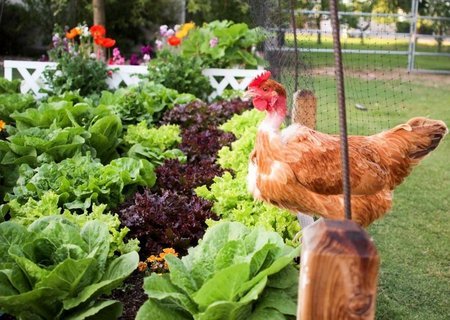
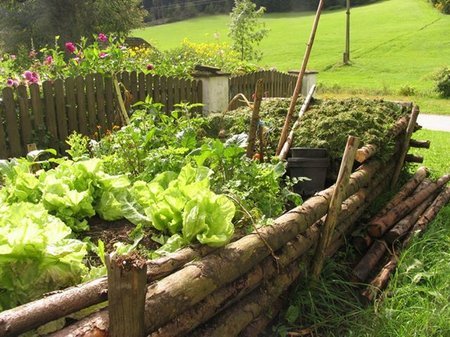
Organic Garden – How To Avoid Pesticides? Organic garden completely excludes the use of pesticides. This is really perilous for the product, the plants and even to humans. But how to make your garden organic? There are 3 main ways to achieve this goal.

One of the easiest ways to protect your vegetable organic garden against prevalent pests, including aphids, mites and beetles (and avoid pesticides), is to make your plants as healthy and robust as you can. The soil should be well ventilated. It should include all essential nutrients for vegetables to grow. You must ensure organic fertilization of soil and offer protection in the form of mulching. Removing weeds and small plants frequently will improve the system of all-natural defense of your organic garden.

organic-garden

The second way includesthe natural attraction of beneficial insects that eat garden pests. This can be a particularly easy organic gardening task. Insects, like ladybugs, lacewings and hover flies are very useful for managing organic garden. Ladybugs eat mites and whiteflies.

organic-garden3

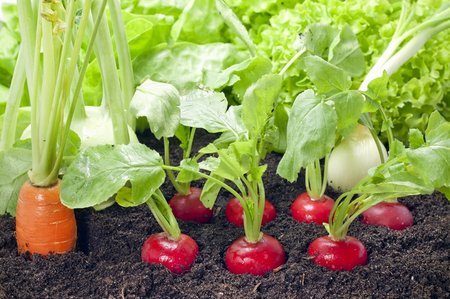
The third way to avoid pesticides can also be quite simple and very useful. You will be able to just create plants that repel pests. This is usually not some exotic plants, but also well-known herbs and vegetables. They generate cultures and naturally repel insects at the same time. This makes them especially valuable. Spearmint and cilantro are effective in repelling aphids. You can easily grow basil and rosemary to repel flies and moths. You can protect your cabbage sprouts from butterflies using peppermint.

organic-garden2

There are alsovegetables that repel pests successfully. You can plant garlic and chives near plants attacked by aphids. Tomatoes are useful in repelling cabbage worms and some types of beetles.

So, you can take all three pest repelling organic solutions to have a beautiful organic garden. It is wise not to use artificial pesticides because they can kill the useful insects and plants.

organic-garden1

Read also: Tips How To Grow Far Better Plants In Garden

First Aid For House Plants

0

When is required the first aid for house plants? House plant varieties have changed over the years, but one would expect their problems to be quite unchanging. This is surprisingly is not so – the menace of coal gas fumes has disappeared in recent years but it has been replaces by an equally serious but completely different menace – the hot, desert-dry air of the centrally-heated room. Even pests and diseases change – Pelargonium rust was virtually unknown until a few years ago.

The problems that can occur are many and varied. Inspect the plants regularly, especially under the leaves. You may detect the first signs of rot because you forgot to reduce watering as winter approached.

plants-first-aid

Likewise, you may notice symptoms of light deficiency if you have redecorated using much darker wallpaper. The secret of successful plant care is to look for and act on the first signs of trouble.

When we’re talking about the first aid for house plants, we should know that prevention is always better than cure! So you follow these instructions for the preventive measures and apply the first aid for house plants:

house-plants

1. Don’t bring trouble in with the compost. Never use unsterilized soil. Buy a specially-prepared compost, which you can be sure will be pest- and disease-free. Alternatively sterilize soil if you wish to prepare a home-made compost.

2. Don’t bring trouble in with the plants. Inspect new plants carefully and take any remedial action which may be necessary before putting them with the other plants.

3. Don’t put plants in the danger spots. These spots are: between an open window and a door, on a windowsill with poor-fitting frames, in an unlit corner or a dark passageway, between closed curtains and the window during frosty weather, near an air-conditioning heating duct, or on the TV or radiator unless extra humidity is provided.

001

4. Remove dead flowers and dying leaves. Hygiene is important. Fallen leaves can become covered in grey mould, and this will spread rapidly to healthy leaves if conditions are cool and humid.

5. Act promptly when there is trouble. Don’t wait. Move the plant to a better location or spray the leaves if such treatment is recommended.

Summer Insects And Garden Pests

0

Summer insects and garden pests enjoy being outdoors in the summertime as much as we enjoy. Although most are harmless or even beneficial, there are a few that can be troublesome.

Summer Outdoor Pests

The most common summer pests in many areas are mosquitoes and the ‘social’ wasps, which include paper wasps, hornets, and yellow jackets. Mosquitoes are annoying at best put pose a number of health risks as well. Even if you live in a dry valley, standing water anywhere in your neighborhood can breed mosquitoes, which can carry the deadly West Nile virus.

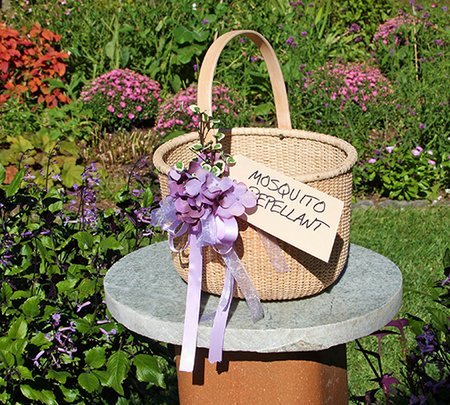
Protect your family from mosquitoes with insect repellant and long sleeves and pants at dawn and dusk. Dump and remove any potential source of standing water around your home and yard, as even a small amount of standing water can encourage the breeding of mosquitoes.

garden-insects

About 90% of insect stings, which we blame usually on bees, come from yellow jackets. Watch for stinging insect nests and hives when mowing the lawn, trimming trees, or reaching into cracks and other small spaces. Keep attractants (fruit, soda, candy, garbage cans) put away or well-covered. Never swing at a stinging insect or attempt to eradicate a hive yourself. Professional pest control operators are a must for dealing with these pests.

Summer Garden Pests

Attempts to grow summer fruit, vegetables, and flowers can be quickly undermined by insects, birds, and rodents. Only some pesticides can be used on edibles, and care must be taken not to kill beneficial summer insects in your garden. Watch out for aphids and grasshoppers this summer, as well as snails, slugs, tree borers, leaf beetles, tent caterpillars, squash bugs, and spider mites.

snail

Search online for pest pictures to better help identify any you find in your garden so you can find the best way to attack the problem. There are many ways to deal with these and other common garden pests, including cultural controls, biological controls, and insecticides. A great source for information on dealing with pests local to your area can often be found through university cooperative extension program websites. Local pest control companies will also be familiar with native pests and have the best tools and products to help you cope with the infestation.

Summer Indoor Pests

Fortunately, summer is the slow season for indoor pests. Some pests that do frequent the indoors during the summer include ants, fruit flies, earwigs, root weevils and carpet beetles. Keeping window screens in good repair and closing doors will help keep many pests out of the house. Apply caulk or bee foam to cracks or other openings that will let pests into the house.

mosquito

Because toxic chemicals can make kids or animals sick, it is best not to attempt to eradicate an indoor pest problem yourself. Instead, contact your local pest control company and explain what types of pests you’ve encountered. A professional exterminator can recommend the safest, most effective products and strategies to keep your summer truly pest free.

What Factors Might Be Harmful For Your Plants?

0

What Factors Might Be Harmful For Your Plants? Growing a beautiful and a fruitful garden requires more than just a green thumb. Plant growth depends on so many different factors. Some of the most important ones are age of the vegetation, climatic conditions, habits of vegetation, season etc. Growing of the vegetation is a complex procedure.
Damaging of the roots is the major reasons why the plants do not grow up till their maximum capability. The cold dry weather is a major plant growth inhibitor. It damages your plants to a great extent.

There can be various factors that stop the growth of your plants. If you are a vegetation lover and love to keep them at your homes, you should be getting an advice on plant development. Whether you want to decide the right vegetation for your indoor or outdoor yard, you must remember about the requirements of these vegetations, like Where to put it, how much water to give, how much amount of sunlight to offer, and the surrounding components of the vegetation. While setting up the vegetation, consider these factors:

veggies

1. Amount of light. One of the most vital plant growth factors is the sunlight. It is with the help of sunlight that plants undergo a scientific process called photosynthesis and prepare their own food for survival. Different plants have different sunlight requirements depending upon its type and family to which it belongs to. Take suggestions from your plant breeding expert. If a plant does not receive enough light, even though it will be healthy looking, it won’t flower. It will grow slowly or gradually start appearing weak. If it gets too much of light, it will start dropping its leaves.

2. Amount of water. It depends on the plant you want to breed. Some plants need boggy and wet soil for better development while others need minimal. Many plants are also draught resistant. Some indoor plants can go without watering for a longer period of time than others. The best way by which it can be understood whether the amount of water is appropriate or not is the appearance of its leaves. If the leaves are unnaturally pale or yellow looking, that means they are being over watered. If they are crisp and brown, they are being under watered. In both cases, it is harming the plant growth.

watering-garden

3. Temperature and humidity. These are two very important plant growth factors. With outdoor plants, the gardener should know the humidity of that area. A plant kept in too cool conditions may have healthy leaves but will not flower. Such leaves may turn bronze or reddish in color. A very dry environment will lead the leaves to become brittle or brown edged at the corners. The plant breeding services will offer the appropriate guidance to a healthy development. (Read also: Indoor Plants Temperature Guide)

4. Fertilizers. Without the use of this, your gardening is of no worth. All the vegetations will die eventually with lack of proper nutrients and growth factors. Use the most suitable kind of fertilizer which is the best for your garden and its vegetation. If you want an organic garden to be developed, then you should consider making the use of a manure to obtain the maximum out of your garden. Or, you can also use a chemically or commercially prepared fertilizer for the growth and development of your gardens. Either way, you need to make use of some type of fertilizer to enhance the growth of your gardens and have them beautifully grown around your house.

garden-damaged-planthealthy-wheat

Overfertilization (left), optimal fertilization (right)

Organic Weed Prevention

0

Organic Weed Prevention – Organic weed prevention is an alternative to conventional gardening. But, the question of why should you do organic is still up in the air.

Garden is a beautiful thing to have. Aside from the fact that it adds splendor to your place, it too provides an area for rest and refreshment. Likewise, a vegetable garden is also beneficial. Not only can it offer additional income, it can also improve your family’s health. There are many reasons why you would want to have garden in your yard. It doesn’t matter what kind, as long as it has the things that you want from it. Yet again, although you have succeeded in having an attractive lawn, you could encounter some problems.

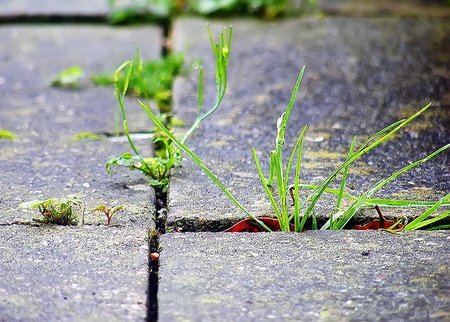
Weeds are just one of the few gardening problems that you may encounter. They are undesirable grasses that could grow anywhere on your lawn. Although some of them may look beautiful, nonetheless, it is not advisable to grow them with your plants.

weed

There are different ways of organic weed prevention. You can buy weed spray, grass killer fertilizer or follow organic weed prevention. Though lawn weed killers may be effective, some of them are still discourage.

So far, the best and most advisable way to kill weed is through organic weed prevention. It is simply the use of organic weed prevention instead of chemicals. But, why go for this option?

Here are some of the reasons why you should consider going for the organic way of killing unwanted grass in your garden:

1. Be an active environmentalist. The major reason why organic living is promoted is because of its importance to anti-pollution and soil pollution. That is why using natural products is your greatest contribution to the most important and biggest campaign of our time.

2. Healthy soil for your plants. If there is one thing that you have to take care of in your garden, then that would be the soil. It is very important to have healthy soil to grow beautiful and healthy plants.

weed1

The natural nutrients of the soil are depleted, when too much chemicals are put into it. When this happens, weed roundup; unhealthy plants and crops and unattractive flowers are all what you will have.

On the other hand, when you have healthy soil, you can be sure that controlling unwanted grass will no longer be a problem. This is because the plants will be able to control some of their growth.

3. Avoid health hazards. Conventional fertilizers are packed with chemicals that are hazardous to our health. In the long run, people who have been exposed to these chemicals may develop ailments that are attributed to using these chemical weed killers.

4. Government support. Nowadays, since organic living is highly recommended and promoted by the governments and international organizations, then you can expect that it is only beneficial for you.

weed-prevention

First, you don’t have to spend too much money to market your products. Governments now allot budget to market organic products and items. That is why, whenever people see organic products, they buy them.

Moreover, governments are now providing areas in supermarket and other market areas wherein organic products are displayed. Sometimes they even promote those companies and farms that use organic products. Because of this, people would easily know which product to buy and where to buy them.

Protect Your Vegetable Garden From The Harmful Insects

0

Protect Your Vegetable Garden From The Harmful Insects -The harmful insects will eat your vegetables, destroy the stems, tear up the leaves and even worse, bore themselves into the plants you are trying to grow. You can arm yourself to protect your vegetable garden if you can identify them and come up with a remedy before the harmful insect problem turns into a complete infestation. Here are four common harmful insects that you will encounter in most home vegetable gardens.

To better protect your vegetables in your garden from harmful insects, it is best to know what they are so you can plan out your attack and prevention. These are just 4 of the many you will encounter. Take the necessary steps to start protecting your harvest today.

vegetable-garden

Vegetable garden

Aphids

These bugs are the most common and with good reason. They eat everything! Nothing is immune from an aphid. They come in a wide range of colors and sizes but are in large part all shaped the same, sort of pear-like. Aphids will form their population on one plant and when that population increases in size to the point where the plant is overwhelmed with them, some of the aphids will form wings and fly off to the next plant where the process starts over. As you can see if you do not take the necessary steps early enough, you could have an infestation. Use yellow sticky traps and neem oil for immediate solutions, but if you want a long term solution start attracting ladybugs. They eat aphids!

aphids

Aphids

Corn Earworms

They will affect mostly your corn and tomato crops as well as a few other vegetables, but they can do a tremendous amount of damage. They are about an inch long and are usually green to brown in color with dark stripes. They feed on stems, leaves and the fruit of your plants. They don’t spread as fast as aphids, but can do equal damage. Immediate solutions include a Btb spray, and for long term get some Trichogramma wasps in your garden as soon as possible.

Corn-Earworm

Corn Earworm

Cucumber Beetles

Cucumbers, melons and squash are three of the many plants that these pesky critters will go after if you do not take care of them early enough. They can wreak a tremendous amount of havoc on your home vegetable garden. They have yellow wings with black spots or stripes and their larvae are whitish grubs. An immediate solution is to spray with neem oil soap, however, if you want to get rid of them, you need to start by destroying the larvae in the ground. Milky spores and beneficial nematodes will do the trick. Visit your local garden center or co-op for more information.

cucumber-beetle

Cucumber beetle

White Flies

Tomatoes and cucumbers are the two most popular items that people grow in the home vegetable garden and therefore white flies are well known to many. They love to feed on these two plants, among others, so if you aren’t careful, you will become a victim to them. They are very tiny and as their name implies, they are white in color. Using yellow sticky traps will help immediately as will a garlic spray, insecticidal soap and neem oil. For long term prevention, attract ladybugs and lacewings to your garden. They will feed on the white fly.

traps1

The Clovers

0

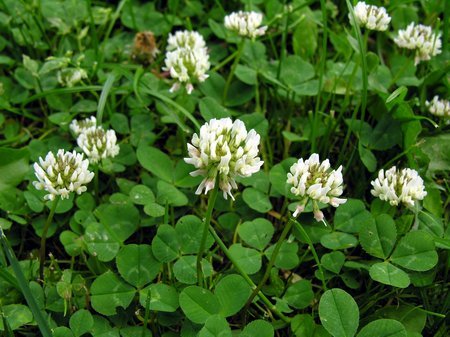
Clover is a major headache for many lawn owners. During the dry days of midsummer the bright green patches stand out against the dull and pale grass. This patchy effect is an eyesore, and control was difficult until the discovery of the newer-type selective weedkillers.

The clovers you are most likely to see are white clover (Trifolium repens) and the smaller yellow-flowering species known as lesser trefoil. As with all clovers, they are encouraged by both water shortage and nitrogen shortage. So wherever clover is a problem you should feed with a nitrogen-rich fertilizer every spring – never use a phosphate- or potash-rich fertilizer at the start of the season.

clover-white

Clovers

White clover control

If clover has become well-established use a combination of techniques. Rake regularly before mowing so that the creeping stems are brought up to meet the blades. Also water the lawn during drought, or clover will spread rapidly! In addition a chemical attack is needed. Lawn Sand is a useful treatment in spring – top growth is burnt off and vital nitrogen for clover control is provided. Apply a selective weedkiller which contains two or more ingredients in June or July – repeat the treatment six weeks later.

Black medic and lesser trefoil control

Black medic (Medicago lupina) and lesser trefoil are less sensitive to selective weedkillers – a repeat treatment after about six weeks will be necessary. These weeds are an annual, so hand weeding of small clumps is practical. Use a grass box when mowing.

clovers

Clovers types

Snakes In The Garden

0

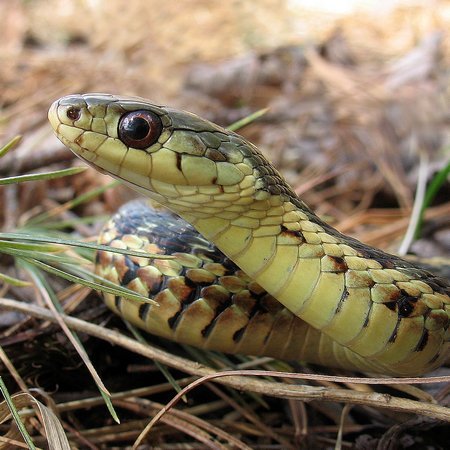
Snakes In The Garden – To have a snake or two in the garden is good. Non-poisonous snakes, such as the common garter snakes, are beneficial creatures because they eat pest insects, mosquito larvae, slugs, snails, crickets, rats, mice, voles and even other snakes which may be poisonous.

But if you really don’t want snakes in your garden, here are a few tips to eliminate them without hurting or killing them:

– Keep the lawn neatly cut and clean. Be careful using weed eaters because the sting from the fast moving string can kill them.

– Snakes need cover for protection. Don’t leave wood or brush piles sit in one spot for more than a month.

– Keep leaves and other debris picked up.

– Don’t keep piles of rocks.

garter-snake

– Stack firewood on a rack 12″ off the ground.

– Remove old lumber or junk piles.

– Remove their source of food. Keep the insect and rodent population under control.

– Place garbage bags in sealed trash cans away from the house.

– Repair cracks along the foundation and fill holes around pipes. Snakes only need about a ¼ inch crack to get inside.

– Sprinkle moth balls around the perimeter of your yard or garden. But beware that these can be dangerous to pets and children.

– Sulfur from a garden center is said to keep snakes away.

– Don’t plant bushes and other plants too close to the foundation of the house.

– Use mulch in the garden beds but not too thickly.

mulching

– Trim the lowest limbs on shrubs and bushes so they are at least 12 inches from the ground.

– Construct a fence around your garden with heavy galvanized screening. Make it three feet wide with quarter-inch mesh. Be sure to bury the bottom of it six inches below the soil surface.

Eliminating Dandelion From Your Lawn

0

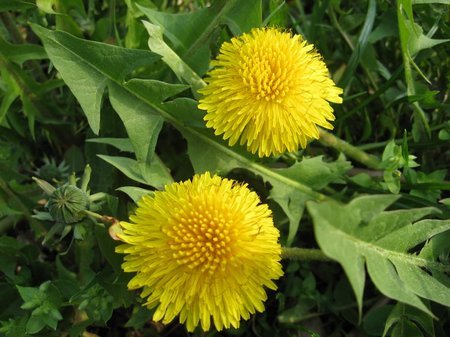
Eliminating Dandelion From Your Lawn – As the weather warms up and the grass begins to grow dandelions seem to pop up everywhere. The word dandelion is an English word that is derived from the French name ‘dent de lion’. This means lion tooth which could refer to the fact that dandelions have coarsely tooth leaves. Some feel this pesky flower got its name because it is deeply rooted in the ground. These plants are useful in different ways but people still consider it a weed that spoils the look of their beautiful landscape.

Eliminating dandelions can be difficult because they can grow in even adverse circumstances. The seeds that they produce do not remain dormant very long and quickly germinate.

They also do not need pollination to produce seeds because they can fertilize themselves. Dandelion seeds can survive six years in the soil and just one plant can release as many as fifteen thousand seeds at a time. When a seed sprouts, it will also create that many more seeds so you can see why it grows and spreads so quickly.

dandelion

When getting rid of dandelions you must make sure that you exterminate them completely because they will regenerate. To get rid of them completely you need to kill the taproot also. There are both inorganic and organic ways to get rid of this weed. You can call your local lawn service for dandelion lawn treatment to get rid of them but you need to make sure that you kill the dandelion as soon as you see the seedlings.

dandelion-seeds

The best way to totally kill the dandelion is to pull it out of the ground, complete with the taproot, which can be two to three feet deep in the ground. This is the main root of the plant and though you do not see dandelions in the cold months the taproot is surviving underground and when spring arrives, you will see the dandelions. If you have a lot of dandelions in your yard this can a monumental task but a commercial landscape management company can send a landscape technician to do it for you.

dandelions

Make sure that you are mowing your lawn regularly to help inhibit dandelions from growing and keep your grass two and a half to three inches in length. Taller grass will keep the weeds from getting the sunlight and space they need to grow. In late winter, you should apply pre-emergent herbicide to prevent the dandelion seeds from germination. This herbicide will affect the growth of the grass to some extent but the grass will recover.

Importance Of Garden Décor

0

Importance Of Garden Décor – Garden décor offers peace of mind and a superb escape from mundane lifestyle. It is also a rightful means for individuals to be in unison with nature, beautifying their surroundings in which they live and work. Tools used as décors for lawn area, assert positive feeling in the mind. Here are the few thoughtful reasons in support of décors:

1. Adds uniqueness. Embellishing your lawn with décors will give you natural feel, generates a kind of spiritual sense, and satiates a truly earthy appeal. With use of lawn decoration items, garden owners can show off their creativity and add uniqueness in the verdant spaces. These objects of garden decoration also enhance overall beauty.

garden-decor3

2. Transforms life. Decorating the green spaces, especially garden areas, enchants living areas, and creates sense of innovation and mystic. The garden accessories are symbolic of greenness, prosperity. The garden accessories enrich surroundings, going far beyond mundane lifestyle and its different existing forms.

3. Revitalizes imagination. Garden accessories put forth creative semblance, and lawn lovers use them in creating a special, attractive feeling, quite close to what they have imagined in faintest of their dreams. This is what comes to be known as gardening imagination. With this imagination active, lawn owner will have advantage to select subtle ornate objects that fall in line to their imagination.

garden-decor2

4. Creates personalized sanctuary. Accessories used in decorating your garden will cast a magic spell in your life by creating an enriching sanctuary, an artistic poetry and more of pleasure dome. Richness, depth and a true sense of motivation begins to emanate as soon as you look around the garden area.

5. Brings relaxing invitation. Decorating your garden area with ornate de’cor is also significant because it gives an inviting touch. Next time when you throw a party in green, embellished surroundings, the first statement of praise that will come will be from invitees. The real wonder, magic and pleasure of life created by lawn-related accessories definitely go beyond praise levels too.

garden-decor5

6. Soothe the soul. The creative, attractive garden décors delights your senses, and alleviates your spirit. The décors show up your personality and give meaningful experiences, besides giving lasting pleasures of beauty. Capturing the moments of wonder, joy and building up those moments of inspiration is reflected through garden accessories. Whatever you wish to call them, garden décors or garden accessories, making the choice of these accessories is a step towards building an appealing, creative and attractive green space, more like a fairy tale and quite mystical too.

garden-decor4

Urban Gardening Concept

0

Urban Gardening Concept – Living in an urban environment or having just a patio or deck doesn’t mean you can’t be a gardener. Container gardens can give you the same sense of accomplishment and your vine ripe tomatoes will taste just as good as those from a backyard plot. Urban gardening requires planning and organization in a way backyard gardening does not. But that is part of the fun.

First, watch the space where your containers will go over several months. How much sun does the area get? Which way does the sun move?

If there’s plenty of consistent sun you’re in good shape. If the sunlight is spotty or shifts dramatically during the day take this into consideration. You may want to put your containers on wheels so they can be moved easily. Or plan to grow leafy vegetables like lettuces and herbs rather than sun lovers like tomatoes and peppers.

urban-gardening2

Are there natural or architectural features you can use? Is there a wall that will serve as a wind block? Can it be trellised for beans and vines? All these factors will help determine what and how much you want to plant.

A container garden is something of a miniature eco-system. Problems that might be spread out over a hundred square feet in a small backyard plot can be magnified when focused on just a few plants in close quarters. Soil quality is especially important. Synthetic soils are a good alternative when growing in pots. They are disease and weed free. Synthetic soils also offer excellent drainage. Organic soils can become waterlogged and drown the roots.

urban-gardening3

Whether you go with organic or synthetic soil remember that your plants will need plenty of nourishment. With such a small amount of soil, nutrients will be depleted quickly in a container environment.

The easiest way to fertilize plants in containers is by preparing a nutrient solution that is used to water the plants. There are many good commercial fertilizer mixes available to make nutrient solutions. If you use one of these simply follow the directions on the label. You can also create your own nutrient solution by dissolving 2 cups of a complete fertilizer such as 10-20-10, 12-24-23 or 8-16-8 in 1 gallon of tap water. This is now your base solution. From this you can create a nutrient solution by adding 2 tablespoons of the base solution to 1 gallon of water.

urban-gardening4

Plants should be watered with the nutrient solution about once a day. While frequency of watering will vary slightly from one crop to the next, once a day is a good starting point. In particular, watch vegetables with a lot of foliage growth, they may require twice daily watering. Once a week use plain tap water instead of the nutrient solution. This will prevent mineral build ups in the soil.

Many vegetable plants adapt very nicely to container growing. Leafy vegetables like lettuces, cauliflower and broccoli will do very well. Upright plants such as beans, peppers and tomatoes are also good candidates. Radishes, onions and other root vegetables are very happy in a deep container. Avoid plants with running vines. They will be difficult to manage and are better suited to wide open growing spaces. Keep the trip to the pumpkin patch on the calendar. Container grown herbs offer savory leaves all year long. Move them inside when the weather gets cold and enjoy fresh herbs all winter. Each of these vegetables has a unique root system, which will require a well suited container.

urban-gardening

Containers should be chosen for utility first, appearance second. Know what you want to grow before choosing the containers. Good drainage and a wide opening are key to allowing roots access to oxygen. Containers sizes should be proportionate to the plants in them. Plants with shallow root systems need a shallow pot while deeper roots systems will require more soil to explore. A variety of sizes, shapes and materials will give added visual interest to your urban garden.

Harvesting your crops and sharing them is just one of the benefits of container gardening. By adding plants to your urban landscape there is a renewed connection to the earth. Growing offers the same satisfaction to all gardeners, regardless of locale, crop or container.

Valentine’s Day Flowers

0

Valentine’s Day Flowers – Valentine’s Day is the day to show your love and appreciation to your partner. The traditional gift for this occasion will always be the Valentine’s flowers received by the ladies. Valentine’s flowers are not restricted to just ladies though, all men would be happy to receive flowers although they may not admit it. If you decide to buy flowers for someone you love this year, you can get them by ordering online. This will give you a chance to check out the online florist and pick something that you want for your loved one.

On February the 14th every year couples young and old express their love and devotion for each other by giving gifts or maybe even planning their wedding for Valentine’s Day. And as long as they are together, are bound to celebrate this day in one way or another.


valentine's-day

Some romantic men like to express their affection by sending flowers to their lady’s work place so that the lady can exhibit them to their friends. Valentine’s Day is the time when ladies at work will be watching the clock and wondering if or when the flower delivery man is coming. Others are waiting expectantly for that knock on the door. Receiving Valentine’s Day flowers is a big thing for women, young or old.

roses

Red roses – an ideal gift for Valentine’s Day

Valentine’s flowers are available in many forms. Single flower, flower arrangements, gift baskets and living plants are the most common selection for gifts. Some ladies like bold arrangements, some have favorite colors, some loves exotic plants but most ladies just love the red roses for Valentine’s Day. Understanding the personality of your loved one can help in choosing the correct floral arrangement to purchase. If you are one of those people who think buying flowers is a waste of money then make a choice of a beautiful potted plant. This can be kept and can grow just like your relationship. Other examples of Valentine’s flowers are orchids, irises, tulips, chrysanthemum and sunflowers.

orchids1

Nice bouquet with orchids and pink roses

By sending love and romance flowers on Valentine’s Day, you will be able to say ‘I care about you’ in the most effective way. A beautiful single red rose or a bouquet of roses is the most popular flowers for Valentine’s Day.

People of all ages are using internet these days to view and order flowers for delivery. Most online flower sites will offer you information or charts on type of flowers, color of flowers and what they symbolize.

With the use of the Internet, you could easily send flowers for Valentine’s Day by using the services of online florists. Some online flower retailers will even offer delivery to international locations. This is made possible by having international affiliate support.

tulips-bouquet

Tulips bouquet

The price of your flower arrangement will depend on what you select and the size of the arrangement. You can purchase cheap valentine’s flowers to those that will cost a fortune; the choice is up to you. Websites offer a large selection of flowers and watch out for discount vouchers on offer.

Online flower delivery will do all the organizing and get those flowers delivered for you, lowering the price to you the consumer. You will get a wide selection and at the best prices on the internet.

Just simply click on the flowers you wish to send and you will be directed to another page where you can choose the delivery date, usually on 14th February, and you will even be able to select a gift to include such as teddy bears or chocolates.

valentine's flowers