





5 Tips to decorating with calatheas

0

Indoor plants are becoming a huge trend to homeowners today. After all, they make a good addition to your home by making look green and stylish. Indoor plants to tend to make one’s home looking fresh and comfortable to live in. Even in the office, indoor plants are known to help in destressing. So it is only natural that a lot of us would like to include some indoor plants in our personal spaces. One of these plants is the calatheas. It’s actually a popular plant that originally came from the Amazon rainforest. So not only does it add exotic beauty to your space, but it also provides a lot of environmental benefits.

Here are 5 tips to decorating with calatheas.

  1.    Place them in all the rooms where you and your family mostly spend on.

One of the benefits of calatheas is that it removes toxic agents in the air. It purifies the air indoors so it really helps in improving your health as well as sharpen your mind. So it is only fitting that you place it in your home where you are mostly in. It could be in your living room or bedroom. Having a calatheas in these rooms will make a good environment for you and your family.

  1.    Match your plants to your home’s theme.

When it comes to decorating your home with houseplants, matching it to your home’s theme will help a lot. Calatheas is a versatile plant that can be decorated in any theme, but to customize it, even more, try to place it in a room that matches its color. You can also place it in an area that will contrast the color to complete the ambiance of the space.

  1.    Invest in good vase or pots.

Placing your calatheas in a stylish vase or pot helps a lot in easily making your home looking interesting. How you choose your pots or vases will ultimately affect the overall look of your home so when you are decorating with calatheas, find something that will add value to your space and make it look even more beautiful. Once you have placed the plant in a nice pot or vase, you can now easily find a good spot for it anywhere in your home.

  1.    Place it near the windows.

As much as possible, place your plant near the windows.

Your calatheas will need sunlight too to give it enough light, place it near a window so it will receive enough sunlight to survive. This way, you don’t have to move every so often if you find out that it needs more sunlight.

  1.    Group your calatheas together.

Depending on the number of plants you want to have in your home, it is best that you group your calatheas altogether. This way, the moisture among the plants are spread out and will be picked up by another.  Make sure to not keep it to close though to still maintain good air circulation which is a preventive measure from plant diseases.

Yerba Mate Plant: Growth And Use

0

Yerba Mate Plant: Growth And Use – Yerba Mate (Ilex paraguariensis) is a tree cultivated in Paraguay, Brazil and northern Argentina. Yerba Mate grows in sandy fine-grained soils with good drainage. For people who live in areas without these conditions, yerba mate is grown as an indoor plant. Yerba Mates thrive in shade as well as low light conditions, making them the perfect houseplant.

Yerba Mate plant

They are even a delight to watch as they produce fragrant white blossoms from October to December that turn into vibrant, red ornamental berries in the spring that pop against their attractive dark green leaves. The highest quality Yerba Mate is shade-grown under the rich rainforest canopy and away from direct sunlight. This shelter allows the leaves to retain more of their nutrients and flavor than plants that are exposed to the sun.

Seeds need to be stratified (put through a cool period) and may take between two months and a year to germinate. Cuttings need to be semi-woody, taken late in summer and treated with a rooting hormone like Rootone. Under warm temperatures, it grows throughout the year, even in the north as a potted plant with flowers arriving during the winter and spring months. The leaves can be harvested once the plant is established.

Yerba Mate is often referred to as the ‘drink of the Gods’– drinking Yerba mate is a common social bonding custom throughout many South American countries. It has a smoother taste than green tea, plus it’s loaded with antioxidants. It contains vitamins A, B, C as well as potassium, iron, manganese, and more. It has everything to naturally boost your immune system, improve skin and hair health and get you moving.

Yerba Mate plant contains caffeine (caffeine levels and other nutrients depending on whether it’s a male or female plant; female plants tend to be milder in flavor and lower in caffeine), theophylline and theobromine, the stimulants also found in coffee, tea and chocolate. Yerba mate is rich in a group of compounds called the chlorogenic acids. These agents help to suppress appetite, regulate metabolism and inhibit fat production. This makes Yerba Mate an ideal agent in the fight against unwanted body fat.

Christmas Lights Bring Your Holiday Decorations To The Garden

0

Christmas Lights Bring Your Holiday Decorations To The Garden – Once you have made a decision and are ready to purchase your garden Christmas lights, it’s time to go shopping. Make sure you purchase extra lights, as it is inevitable that the little bulbs will blow. This depends on where you live, in a very cold climate where there is snow, a bulb will blow a lot quicker than if you are living in a warm or tropical climate. It is best to buy these outdoor Christmas lights on sale, as most stores become competitive, and you can big up some real bargains.

Think about decorating only outside this year. This also eliminates all the clutter in the house. You can decorate all the windows with outdoor Christmas lights, which will not only give you light inside, but enhance the affect of the lights. Get the whole family involved in decorating the trees and around the tree trunks.

The strings of lights can be weaved into shrubs as well as pot plants. You can turn your garden into fantasy land which will be admired by all, and talked about in the neighborhood. Your neighbors may even follow suit, what a wonderful way to turn your neighborhood into fantasy town.

You can be really creative, and can create a wire mesh figure or just wire mesh balls and weave the garden Christmas lights in and around the mesh, this way you can hang these balls anywhere as long as here is an electrical point nearby. Create something unique, and that no one else has. Give Christmas a whole new meaning.

Garden Christmas lights now come in a variety of colors, just like indoor Christmas lighting. This can enhance your lighting and give you more ideas on how to decorate. For instance, some people have trees that stay green year round in their yards, so they decorate their outdoor trees, as well. The colors can be used to contrast other colors on the building or in the yard as well as add color to the other Christmas decorations.

Keep in mind there are many different ways to use Christmas lights, there are varying styles and colors. You will get your lights hung faster and your home will look much better if you work with a plan. As with any type of decoration, garden Christmas lights need to be handled with care while you are decorating.

A Room For Fall Seasons

0


With fall upon us, say Colin and Justin, and summer’s warm breath a distant memory, it’s time to cozy up ahead of the mercury’s further descent.

Go on, layer on those thick, textural sweaters, turn up the thermostat and enjoy Mother Nature at her autumnal finest.  You know you want to.  Hey, we love wrapping up warm and dashing outdoors to watch the leaves detach from their branches and fall gently to the ground.  Aye, it’s time to welcome ‘crispness’… while, ahem, accepting that another Canadian winter lies just around the corner.

In decorative terms, fall is easily our favourite season; a time for the home to embrace change by adopting a brand new look.  For us, it’s less about full scale renovation and more about how a few simple changes can transform space from cool to cozy. The task of ‘seasonal adjustment’ is actually relatively easy and will make a massive change to the way your home feels, and performs, this autumn.

Imagine your sofa is a classic all year jacket; a fashion staple you can dress up, or down, as required. What would you do to warm it up for the fall? You’d pile on the layers, huh? Exactly.  So treat your sofa to layer upon layer of cushions and throws, opting for chunky knits, textural weaves and faux furs to enhance the tactile nature. Put simply, it’s all about ‘feel appeal’. Aye, as far as fall décor is concerned, texture is the new black.


 To read the full article, subscribe for free to Real Style Magazine. Click here to subscribe.


Winter-Flowering Plants In December Garden

0

Winter-Flowering Plants In December Garden – There is no reason why December should be the bleak, flowerless month it is in many gardens. There are a number of winter-flowering plants and here the Christmas rose holds pride of place. The sculptured white blooms of Helleborus niger, sometimes tinted pink, is a masterpiece, with interesting, hand-like leather leaves. The plant may be slow to settle down, but given semi-shade, a rich loamy soil that does not dry out, and a taste of manure in the spring, it will respond.

The green Corsican Hellebore, with clusters of dangling cups, the plum and purple H. atrorubens, and the Lenten rose hybrids are enchanting, when seen nodding together.

Iris unguicularis (syn. /. stylosa) from Algeria is another winter-flowering plant that no garden can afford to be without. Its foliage is untidy, but the lavender flowers that hide themselves in the tufts are beautiful. If picked in bud when they appear, resembling tightly rolled umbrellas, they will give a magic performance when brought into the warmth of a room.

This iris should be planted at the base of a sunny wall where it can stay undisturbed: poor soil discourages flowering.

Iris unguicularis

Another must winter-flowering plant for the winter garden is the climber, Jasminum nudiflorum, providing gay yellow sprays during mild spells from fall to spring. This is a willing grower needing good fare, shelter, and regular tying in.

And finally, please give a thought to the winter heathers. Erica carnea, the mountain heath, is low-growing and excellent ground cover. Varieties such as rose-pink ‘King George’ are smothered in bloom from December to March.

We can recommend E. carnea, ‘Springwood Pink’ and ‘Springwood White’, of slightly trailing habit, as suitable for furnishing a dull bank, while Celia M. Beale is most desirable being one of the earliest and largest of the whites for its size.

Corsican hellebore

Erica darleyensis is another group growing to 2 ft., and is seldom out of flower from November until the spring.

Fortunately, the majority of winter heathers will tolerate a moderately limey soil provided they are given a diet of damp peat and a place in the sun.

Among the winter-flowering shrubs are the winter cherry, with its white and blush-pink blossom, and the torn golden-ribboned witch hazel, and the heavily scented maroon and yellow Chimonanthus fragrans, the beloved Winter Sweet.

Corylopsis spicata

Our last suggestion is a small shrub, Corylopsis spicata, with fragrant, primrose flowers, not yet grown as often as it deserves.

Three planting months now lie ahead in which to bring color into the garden for next winter.

Gardeners are often disappointed in the behaviour of their potted spring bulbs. They want to know what has gone wrong. First, did they buy from a reliable source? Was it a bargain offer?

Did they let their bulbs dry out after they had started growing?

Camellia

Did they bring their bulbs into the light too soon, before the growth was 3 ins. in height, and the bulb head out of the plant’s neck?

Some lawn enthusiasts give their lawn a last run over this month with the blades high.

Whatever your mowing programme, overhaul and oil your machine before storing it in a dry place for the winter. If it requires repairing, get this done before the spring rush.

5 Tips to Choosing a Backpack Sprayer

0

Despite being a full-time professional, gardening is one of the most popular hobbies around. And so to speak, backpack sprayers come in handy for gardening tasks such as applying fertilizer, weeding, and applying pesticides, among others. However, selecting a good backpack sprayer can prove to be a daunting task without the knowledge on how to pick one. This is especially because they come in many different types, sizes, designs, and modes of operation. As a matter of fact, some are designed for specific use, not forgetting that backpack sprayers vary depending on what they’re made of. To avoid spilling the juice, with most of the bias on things to consider, here are 5 tips to choosing a backpack sprayer for your gardening tasks.

  1. Power – Manual vs Motorized

Backpack sprayers require pumping to produce some form of pressure that ejects the substance you’re spraying from off of the nozzle. This pressure can be achieved by pumping the equipment manually or through a motorized pumping mechanism. This having been said, there are two main types of backpack sprayers, these being the manual and the motorized sprayers. Although they’re relatively more expensive, motorized sprayers are easier to use and more convenient when dealing with a large area. Most of them are battery-operated, which means they require recharging before or after every use. they also tend to require more maintenance compared to their cheaper manual alternatives that can be ideal for spraying smaller areas.

  1. Pump Type

Based on the pump type, there are two main options available, which are:

Piston pump sprayer

Diaphragm pump sprayer

Piston pump sprayers tend to be relatively cheaper than their diaphragm pump counterparts but tend to be less durable when used with dry herbicide formulations. Diaphragm pump sprayers tend to be a favorite for most consumers, owing to their increased durability and easier maintenance/repair.

  1. Safety and Comfort  

Safety and comfort are among the other things that make the best backpack sprayer. It is important to consider the safety and comfort features in a backpack sprayer before choosing one. For instance, some of the best sprayers come with a full-size handle, a gentle spray wand grip, and well-padded straps to increase comfort, reduce user fatigue and reduce the user’s risk of exposure to the chemical formulations. Most of them also feature an adjustable harness and a contoured tank. It’s also important to consider picking one whose tank is made from high-density polyethylene to ensure UV protection. Be sure to pick a backpack sprayer that will guarantee your safety and comfort.

  1. Durability, Maintenance, And Repair

As might have been hinted out earlier, it is important to pick a backpack sprayer that is easy to use, maintain and repair. Also, it is important to choose a product that is well reputed for durability in addition to quality performance.

  1. Chemical-Rating

Some herbicides and other gardening chemicals can be highly corrosive. This makes it important to pick a sprayer that is specifically designed to withstand the effects of the chemicals you intend to use. Also, remember to ask whether the unit’s hoses, seals, and other accessories are herbicide-rated if you’re going to use it for spraying herbicides.  

In a nutshell, safety, comfort, performance, and durability are among the most important things to consider when choosing a good backpack sprayer. With the above tips, you can comfortably approach your backpack sprayer purchase with confidence. You can keep your garden healthy and glowing all year round.

Aglaonemas: Popular House Plants

0

Aglaonemas: Popular House Plants – Large, spear-shaped leaves on short stems are the decorative feature of Aglaonema, the Chinese evergreen. Its virtue, according to the textbooks, is an ability to thrive in poorly-lit conditions, but this is only true of the all-green varieties. The ones with white or yellow variegated foliage need brighter conditions.

According to some European authorities the shade tolerance of this slow-growing plant is its only virtue — it has even been described as being far too difficult for growing in the home. In the United States, however, Aglaonema is regarded as one of the most tolerant and reliable of house plants.

The best advice is to treat it as a moderately easy plant with a few special needs. Grow it in a shallow pot and keep it well away from draughts and smoky air. In winter it requires warm and moist air. Mist leaves regularly, but never use a coarse spray. Surround pot with damp peat. Aglaonema is a slow-growing plant which requires frequent feeding and infrequent repotting. Young specimens are virtually stemless, but older ones have a short trunk which is scarred with old leaf bases.

Aglaonema needs repotting in spring every 3 years. In spring or summer pot up basal shoots with a few leaves and roots attached. Air layering is an alternative.

Types of Aglaonema

The Aglaonemas are popular house plants. The Arum-like flowers which appear in summer are not particularly showy, so they are grown primarily for their large and colorful foliage. Aglaonemas tolerate some shade, but near-white varieties need a well-lit situation. The baby of the group is Aglaonema pictum (6 in. speckled and velvety leaves) — the giant is A. nitidum (18 in. plain green leaves). The usual plain green species is A. modestum, but it is the variegated types which are generally chosen. A. commutatum has silver bands — A. pseudobracteatum (Golden Evergreen) is blotched with yellow, cream and pale green. A. coommutatum ‘Silver Spear’ is an attractive variety, but perhaps the best of all the Aglaonemas are the hybrids Aglaonema ‘Silver Queen’ and Aglaonema ‘Silver King’ with foliage which is almost entirely silvery-grey.

Aglaonema commutatum

Special problems of Aglaonemas

– leaves shrivelled because of too dry air;

– leaves curled with brown edges because of too cold air or cold draughts;

– insects – mealy bugs at the base of the leaf stalks can be a serious problem – so can red spider mite if the light is too bright.

Interview: Mardi Michels, Author, In the French Kitchen with Kids

0

Real Style recently had the chance to chat with author and teacher Mardi Michels about her new book In the French Kitchen with Kids: Easy, Everyday Dishes for the Whole Family to Make and Enjoy and her love of French cuisine. 


Real Style: What do you love about French cooking and French cuisine?

Mardi Michels: I lived in France for a number of years in my 20s and while I was living there, discovered how much I love how the French eat. The concept of shopping everyday for small quantities of fresh produce and ingredients is a wonderful way to ensure you’re eating fresh, real food everyday and while it’s not always possible, it’s still something I try to strive for when I’m home in Canada. The food the French cook and eat at home is actually very simple, despite what many people think – it’s not all Michelin stars and haute cuisine – and the recipes in In the French Kitchen with Kids speak to this. Not only are there no unusual ingredients (mostly pantry and fridge staples) but only one of the recipes calls for a special piece of equipment (a madeleine pan) – you’ve likely got all the equipment you need on hand already. I love that so many of the dishes sound fancy or look fancy but are actually super easy to make (don’t tell anyone but choux pastry – the base for profiteroles and éclairs is actually very easy!!). French food is easier to make than many people think which is perhaps the thing I love the most about it!


RS: You teach after-school cooking classes for boys aged 7 – 14 .  How do children benefit from spending time in the kitchen? 

MM: Teaching cooking is about so much more than preparing and eating food. Cooking is also about reading comprehension, following instructions, team work, collaboration, mathematics, science, chemistry – the list goes on and on. Where I think children benefit most from spending time in the kitchen is the confidence they develop as they make a recipe successfully – the pride I see in my students when they show their finished dishes to their parents is so rewarding for me (and them and their families!). Cooking encompasses a whole set of life skills I believe everyone should learn!


RS: What are some of your favourite recipes for the family?

MM: The recipes I include in In the French Kitchen with Kids are all kid AND parent friendly in terms of both cooking and eating them – I’ve chosen dishes that reflect the way French people eat at home – simply (it’s not all haute cuisine!) and I love that people are cooking from the book with so much success (check out the #inthefrenchkitchenwithkids hashtag on Instagram!). Some of my favourite recipes to suggest parents make with their children are based on what people have been loving – the Oeufs en Cocotte (baked eggs) for beginner cooks, the Ratatouille Tian for intermediate cooks and the Croissants for more advances little chefs and their parents. Other than that, there are a few recipes that I hope become family favourites – Mr Neil’s Roast Chicken (Poulet Rôti), No-knead French loaf (my version of a baguette) and the Mini Berry Galettes.


Interview: Mardi Michels, Author, In the French Kitchen with Kids

0

Real Style recently had the chance to chat with author and teacher Mardi Michels about her new book In the French Kitchen with Kids: Easy, Everyday Dishes for the Whole Family to Make and Enjoy and her love of French cuisine. 


Real Style: What do you love about French cooking and French cuisine?

Mardi Michels: I lived in France for a number of years in my 20s and while I was living there, discovered how much I love how the French eat. The concept of shopping everyday for small quantities of fresh produce and ingredients is a wonderful way to ensure you’re eating fresh, real food everyday and while it’s not always possible, it’s still something I try to strive for when I’m home in Canada. The food the French cook and eat at home is actually very simple, despite what many people think – it’s not all Michelin stars and haute cuisine – and the recipes in In the French Kitchen with Kids speak to this. Not only are there no unusual ingredients (mostly pantry and fridge staples) but only one of the recipes calls for a special piece of equipment (a madeleine pan) – you’ve likely got all the equipment you need on hand already. I love that so many of the dishes sound fancy or look fancy but are actually super easy to make (don’t tell anyone but choux pastry – the base for profiteroles and éclairs is actually very easy!!). French food is easier to make than many people think which is perhaps the thing I love the most about it!
 

RS: You teach after-school cooking classes for boys aged 7 – 14 .  How do children benefit from spending time in the kitchen? 

MM: Teaching cooking is about so much more than preparing and eating food. Cooking is also about reading comprehension, following instructions, team work, collaboration, mathematics, science, chemistry – the list goes on and on. Where I think children benefit most from spending time in the kitchen is the confidence they develop as they make a recipe successfully – the pride I see in my students when they show their finished dishes to their parents is so rewarding for me (and them and their families!). Cooking encompasses a whole set of life skills I believe everyone should learn!


RS: What are some of your favourite recipes for the family?

MM: The recipes I include in In the French Kitchen with Kids are all kid AND parent friendly in terms of both cooking and eating them – I’ve chosen dishes that reflect the way French people eat at home – simply (it’s not all haute cuisine!) and I love that people are cooking from the book with so much success (check out the #inthefrenchkitchenwithkids hashtag on Instagram!). Some of my favourite recipes to suggest parents make with their children are based on what people have been loving – the Oeufs en Cocotte (baked eggs) for beginner cooks, the Ratatouille Tian for intermediate cooks and the Croissants for more advances little chefs and their parents. Other than that, there are a few recipes that I hope become family favourites – Mr Neil’s Roast Chicken (Poulet Rôti), No-knead French loaf (my version of a baguette) and the Mini Berry Galettes.


Create Your Apartment Garden

0

Create Your Apartment Garden – You don’t have to sacrifice your love of gardening just because you’re living your big city dreams-or maybe you’re a total gardening newbie. While it’s lovely to have a spacious lawn and plot ideal for growing your own flowers, veggies and herbs, the reality is that gardening doesn’t actually require a lot of space. In reality, it doesn’t even require a lawn or yard at all. Urban or apartment gardening is spreading like weeds, and tucking into your studio or flat for the winter is the perfect time to get your garden in order.

An added bonus of apartment gardening is that it can be very therapeutic. There are many plusses to city life, but the downside is that it’s challenging to get back to nature. Too much time in the urban jungle can lead to stress and generally feeling blue, but the peaceful, nurturing ambiance of a garden can provide great therapy. Here’s how to get your apartment garden blossoming (and get spring started early).

Define “garden”

Container plants can be just as fruitful and enjoyable as those grown in an apartment garden. Whether you have a small balcony, patio, roof or even a windowsill available, there’s some part of your apartment that gets natural sunlight. The type of plant that will flourish in your apartment depends largely on where you live, the temperature and availability of sunlight. However, popular apartment garden choices include peppers, small tomatoes, lettuce and Farmers Long Japanese eggplant.

Start by choosing the right site and check what your plant demands in terms of sunlight and protection from winds. Warm-season veggies like tomatoes need a minimum of six hours of sun per day and are vulnerable to hot winds. However, ferns and other shade lovers need some safeguarding from the sun and are ideal for apartment dwellers who don’t get much natural light.

Preparing the containers

You can match the container’s design and colors to your décor; just make sure a drain hole is at the bottom. A simple screen can be added to keep the soil inside, and adding a saucer to collect extra moisture that leaks out is a good idea. Just like with children, buy a size larger container so the plant can easily mature. Vegetables do best in containers that are 14 inches in diameter, and the potting mixture should be fast draining while still holding in moisture. Your local garden center will be happy to advise you of just the perfect soil and nutrients.

When it comes to watering, if you’ve worked in a garden in the past, keep in mind that more watering is required for container plants. Sometimes, if the weather gets exceptionally hot and/or windy, watering numerous times per day may be necessary. A thorough and even watering is required to ensure the drainage holes are reached. With fertilization, a bi-monthly liquid option during growth season is an easy method to use.

Apartment garden easy tips

Most importantly, choose a plant that you will truly enjoy whether it’s the aroma of rosemary or miniature limes to feed your addiction. It’s always best to choose plants which are naturally local, as they’re already attuned to the environment (this is less important if you’ll be keeping the plants indoors). There’s something magical about caring for a living thing, but be forewarned-those whimsical fantasies of moving to the suburbs will likely be squashed when you have the best of both worlds in your city apartment.

4 Tips to planting seasonal flowers

0

Flowers are great additions for your outdoor decorations. Flowers come in different categories with some being seasonal that only bloom at certain months of the year. You can grow flowers in your garden in outdoor plant beds or in pots depending on your preference. But, just like any other plants, you have to give them the care and maintenance that they need to ensure that they are healthy.

To do this you need to know how professionals grow and take care of seasonal flowers from a young plant to a mature flowering plant. The right planting technique will enable your plant to stay healthy and strong from the time they are transplanted. Start with a small bed before expanding to a larger area. Here are four tips that professional use that will help you get started.

Plant the right flower in the right season

Every seasonal flower has its own characteristics and growth requirements. Spring normally affect gardeners more severely compared to other seasons of the year. Some seasonal flowers require direct sunlight to grow while others need to be planted in a shade. Determine whether you want to plant the flower in the sun, shade or both.

If this is the case, choose a seasonal flower that thrives in most of the season without requiring you to uproot it once the season comes to an end. A seasonal flower that can survive partially in the sun and partially in a shade is a great choice, although most flowering plants need the sun to flower.

Choose a location you can easily access

Remember that every seasonal flower requires water every once in a while. When choosing where to plant your flower, choose a location that you can water easily. If you are planting the flower directly on the ground, clear the planting bed, removing any grass or weeds and mix up the soil.

Water them frequently

If the flower requires a lot of water, water the bed or pot regularly to ensure that the flower does not dry. Potted seasonal flowers need a lot of water and you will have to water them more often since they have less soil around them that retains moisture. Watering can be done using a hosepipe or watering can. But, ensure that the soil is moist and not waterlogged to prevent the roots from rotting.

Choose seasonal flowers that bloom early

Seasonal flowers that bloom fast are great for gardening. The essence of planting flowers is to have a garden that is lively and well decorated. During colder seasons, most seasonal flowers have a hard time blooming and even if they do, the flowers are normally lost in the snowy garden.

The best seasonal flower varieties should be the ones that bloom during spring or summer giving your garden a fresh appealing look. Get more information about the best flowers on the Garden-R website and accentuate the look of your garden.

With a well kept garden, full of bright flowers, your garden will not only look beautiful but a great place to spend family moments such as family evenings. You can even host a party or rent it out for an event and earn some money.

Eucalyptus Growing Indoors

0

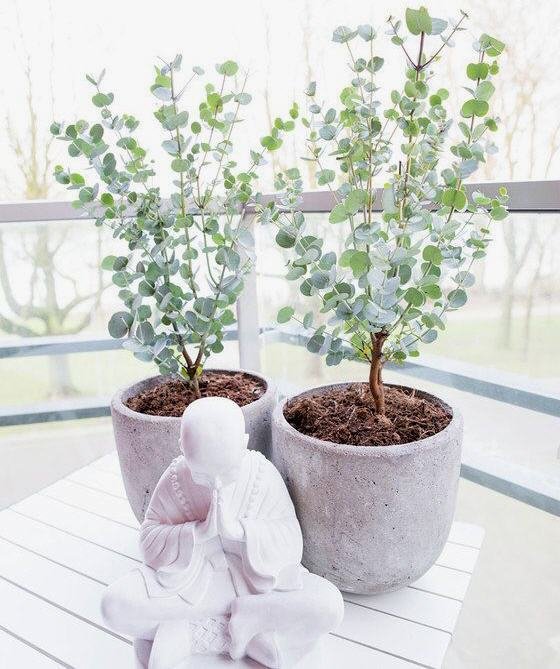
Eucalyptus Growing Indoors – Eucalyptus plant with its fragrant properties and coin-shaped foliage makes a wonderful addition to your indoor environment, especially in the bedroom and bathroom. It is very attractive with silvery blue-green aromatic leaves which give off the aroma of menthol. If you are interested in growing eucalyptus indoors, you need to learn how to grow eucalyptus in a container.

Eucalyptus growing indoors

Potted eucalyptus trees can be grown as container perennials until they get so big that they must be planted in the backyard or donated to a park. Eucalyptus houseplants grow so fast that they can be grown as annuals. Pots can be stood outdoors in summer. Pinch out tips to keep growth in check and to maintain the production of juvenile foliage – old leaves are much less attractive.

Young plants of eucalyptus have attractive grey-green leaves which produce a distinctive aroma when crushed. They will flourish under ordinary room conditions if kept well-lit and cool. Keep eucalyptus plant near a window that receives plenty of sunshine. The Eucalyptus needs ample amounts of light to thrive indoors. Make sure that the environmental indoor temperature does not get too hot, however.

Eucalyptus globulus (Blue Gum) grows too tall for indoor cultivation; it is better to choose either the slower-growing Eucalyptus gunnii (Cedar Gum) or Eucalyptus citriodora (Lemon-Scented Gum).

Secrets of success

Temperature: Cool or average warmth. Keep cool (45-55°F) in winter.

Light: This plant does not tolerate shade, so be sure it always has plenty of light. Some direct sun is beneficial. In front of a south facing window works well.

Water: Water regularly from spring to fall. Water sparingly in winter.

Repotting: Repot in spring every year.

Propagation: Sow seeds in spring – germinate at 65°F.

Use: The essential oils derived from the leaves of the eucalyptus tree are often used as an antiseptic to treat wounds and burns and are added to cough syrups, soaps and cosmetics.

Note: A Eucalyptus grown indoors may not flower. Plants are usually discarded after a couple of years.